
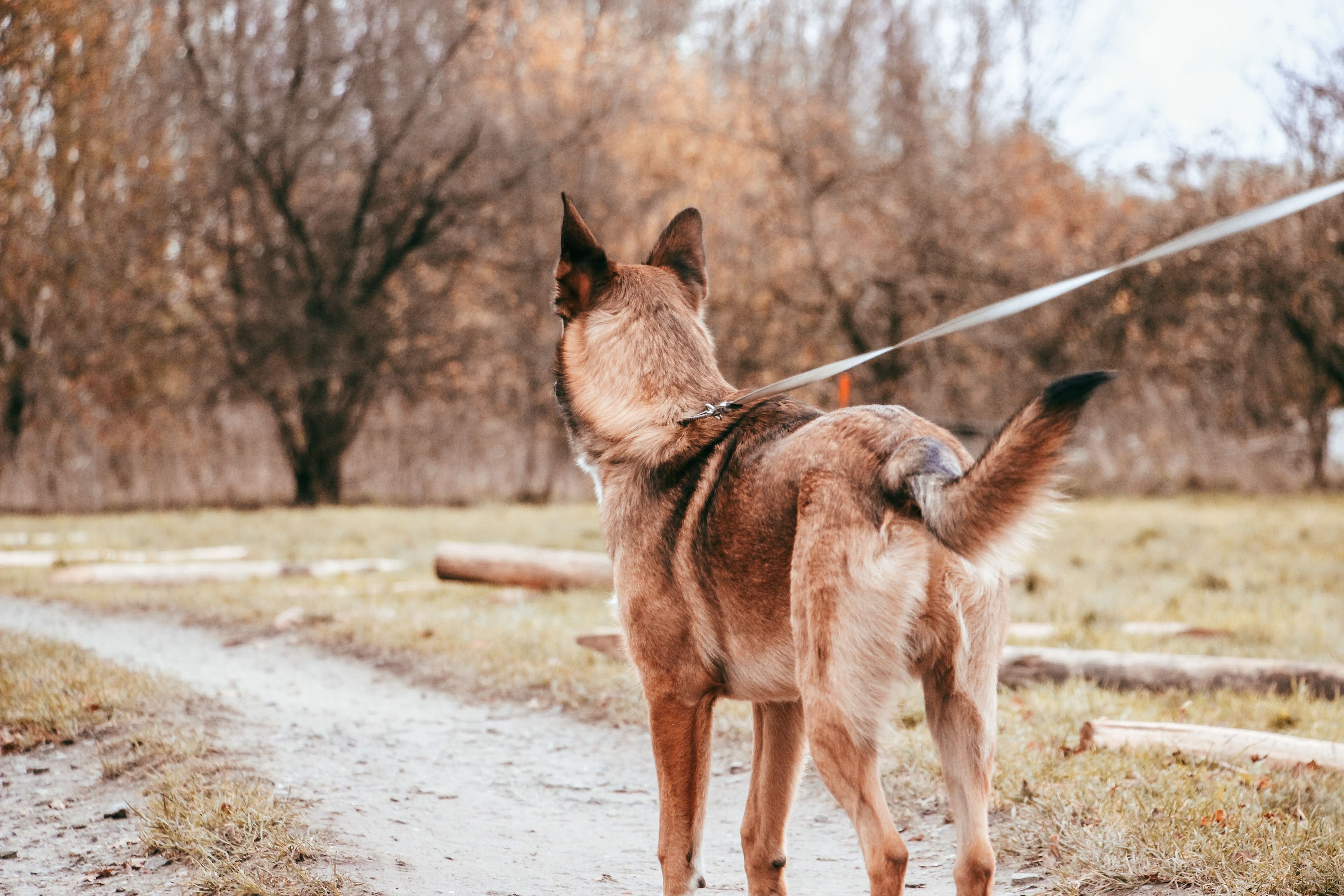
Dogs often communicate discomfort long before they growl. The difficult part is that many early signals are small, brief, and dependent on context. Reading clusters of signals is more reliable than interpreting one movement in isolation.
Subtle signals to watch
A yawn may mean tiredness, and lip licking may follow food. During an uncomfortable interaction, however, several changes together can tell a different story.
- Turning the head or body away
- Lip licking when no food is present
- Yawning in a socially tense moment
- A suddenly closed mouth
- Ears moving back
- Lowered posture or tucked tail
- Freezing or moving unusually slowly
- Scanning for an exit
Look at the whole picture
Ask what happened immediately before the signal, whether the dog has space to move away, and how quickly the body returns to normal. A wagging tail does not automatically mean a relaxed dog; speed, height, stiffness, and the rest of the body matter.
Respond before escalation
Create distance, pause the interaction, and give the dog a genuine choice. Do not punish a growl. Removing warning signals does not remove discomfort and may make future behavior harder to predict.
Changes can have a medical cause
Pain and illness can reduce tolerance. If a dog becomes newly sensitive to handling, avoids familiar activities, or reacts in situations that were previously easy, consult a veterinarian.
Key takeawayThe earlier you notice discomfort, the more options you have to protect trust and prevent escalation.
Sources and further reading
This guide follows humane, reward-based principles and should not replace veterinary advice.