
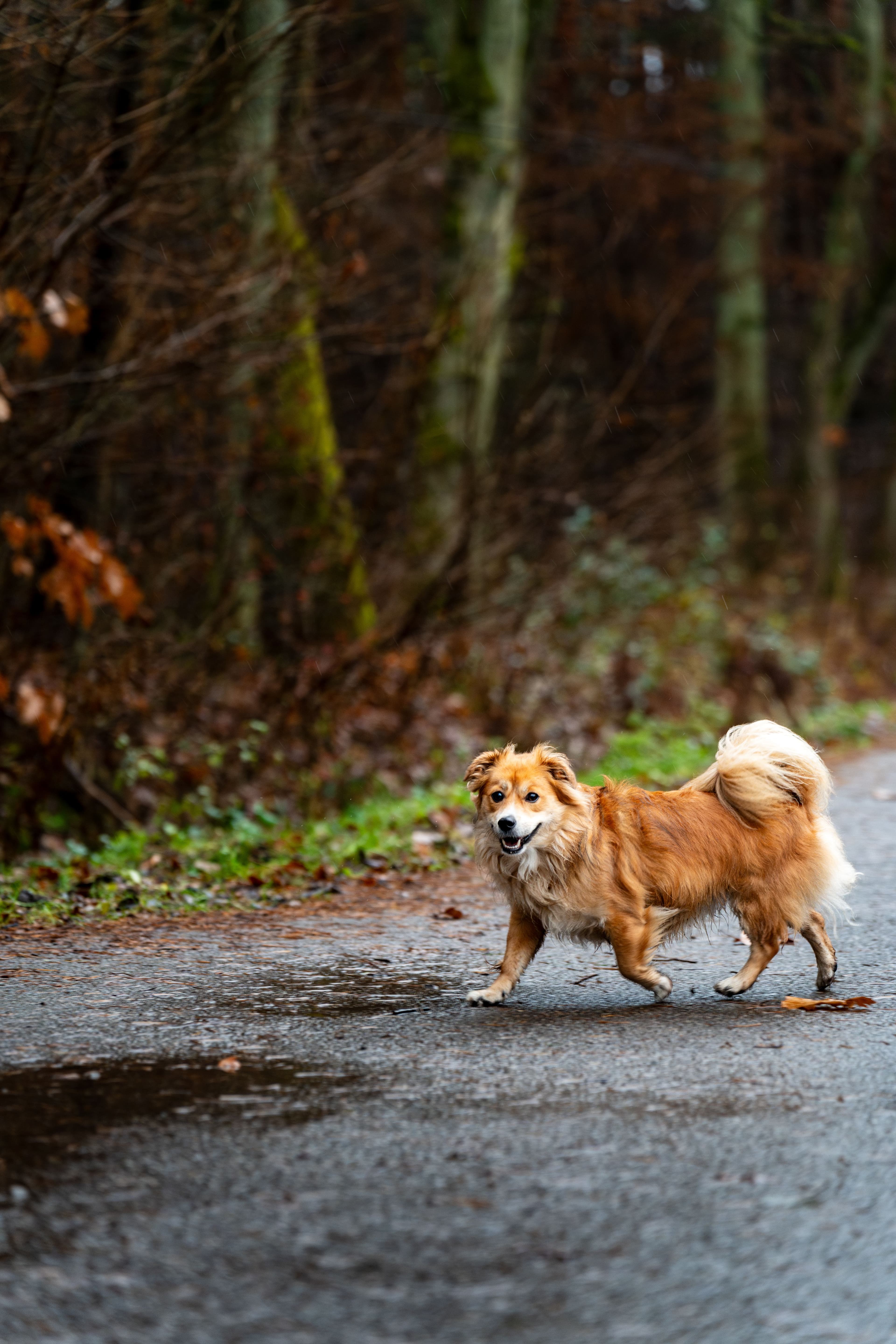
Jumping often works: it brings people closer, starts interaction, or releases excitement. Pushing the dog away may even become part of the game. Lasting change comes from arranging greetings and reinforcing a different way to access attention.
Prevent practice during learning
Use a gate, leash, or greater distance while the dog is still learning. Ask visitors to pause rather than entering at the peak of excitement. Management is not a shortcut; it stops the old pattern from being rewarded again and again.
Choose a realistic alternative
Four paws on the floor is often easier than a long sit. Reward the dog low and close to the ground, deliver attention while paws remain down, and step away calmly if jumping begins. Practice with familiar people before adding exciting visitors.
- Begin after exercise and decompression, not at maximum arousal
- Keep greetings brief
- Reinforce before the jump
- Let calm access to people be the reward
- Give visitors simple, consistent instructions
Excitement needs recovery
A dog who cannot settle may need more distance, a food scatter, or a quiet break. The objective is not to suppress enthusiasm but to help the dog move through it safely.
Key takeawayTeach the dog how greetings work, and make the desired behavior the clearest route to social contact.
Sources and further reading
This guide follows humane, reward-based principles and should not replace veterinary advice.