
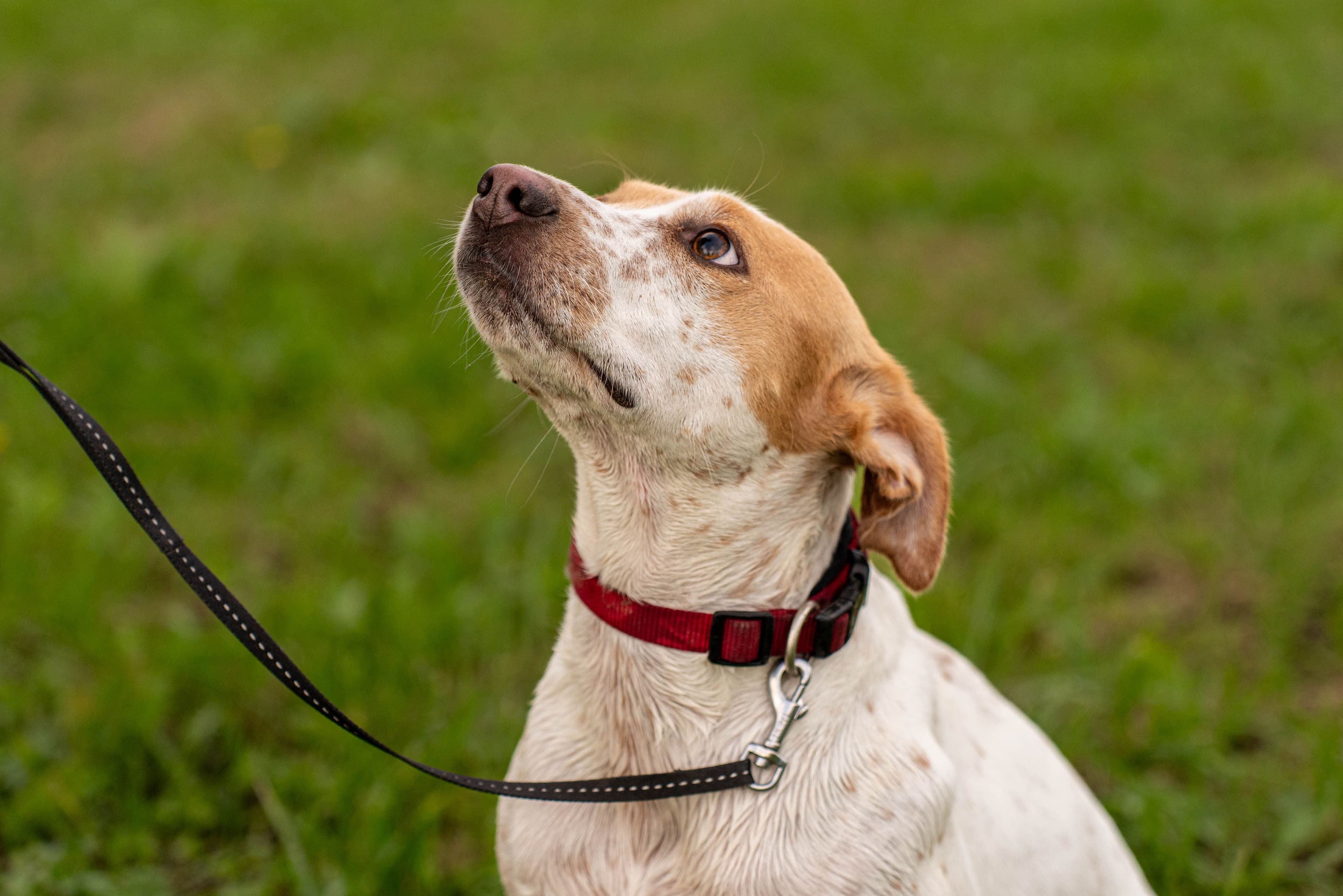
Reactivity describes an intense response to a trigger. It tells us how strongly the dog is responding; it does not tell us the cause. Fear, frustration, excitement, pain, and previous learning can produce similar barking or lunging.
Behavior is information
Calling a dog aggressive can hide the details that matter. Notice the trigger, distance, body posture, recovery time, and what happens immediately after the response. A dog who wants distance may look very different from a dog frustrated by being unable to approach.
Work below threshold
Threshold is not a fixed number of metres. It changes with sleep, pain, previous events, the environment, and the intensity of the trigger. At a workable distance, the dog can notice the trigger and still eat, move, orient back to the handler, or disengage.
- Increase distance early
- Use parked cars or vegetation as visual barriers
- Choose quieter routes and times
- Keep sessions short
- Leave before recovery becomes difficult
Change the prediction
At a safe distance, pair the appearance of the trigger with something the dog values. The aim is not to distract indefinitely. It is to help the trigger predict safety and good outcomes while giving the dog choices such as moving away or looking back at you.
Get individual help when safety is involved
A personalized plan is important if there is a bite history, rapid escalation, redirected behavior, or difficulty keeping enough distance. A veterinary assessment should be part of the process when behavior is new, severe, or changing.
Key takeawayReactivity improves through safety, distance, careful learning, and attention to the emotion underneath the display.
Sources and further reading
This guide follows humane, reward-based principles and should not replace veterinary advice.