
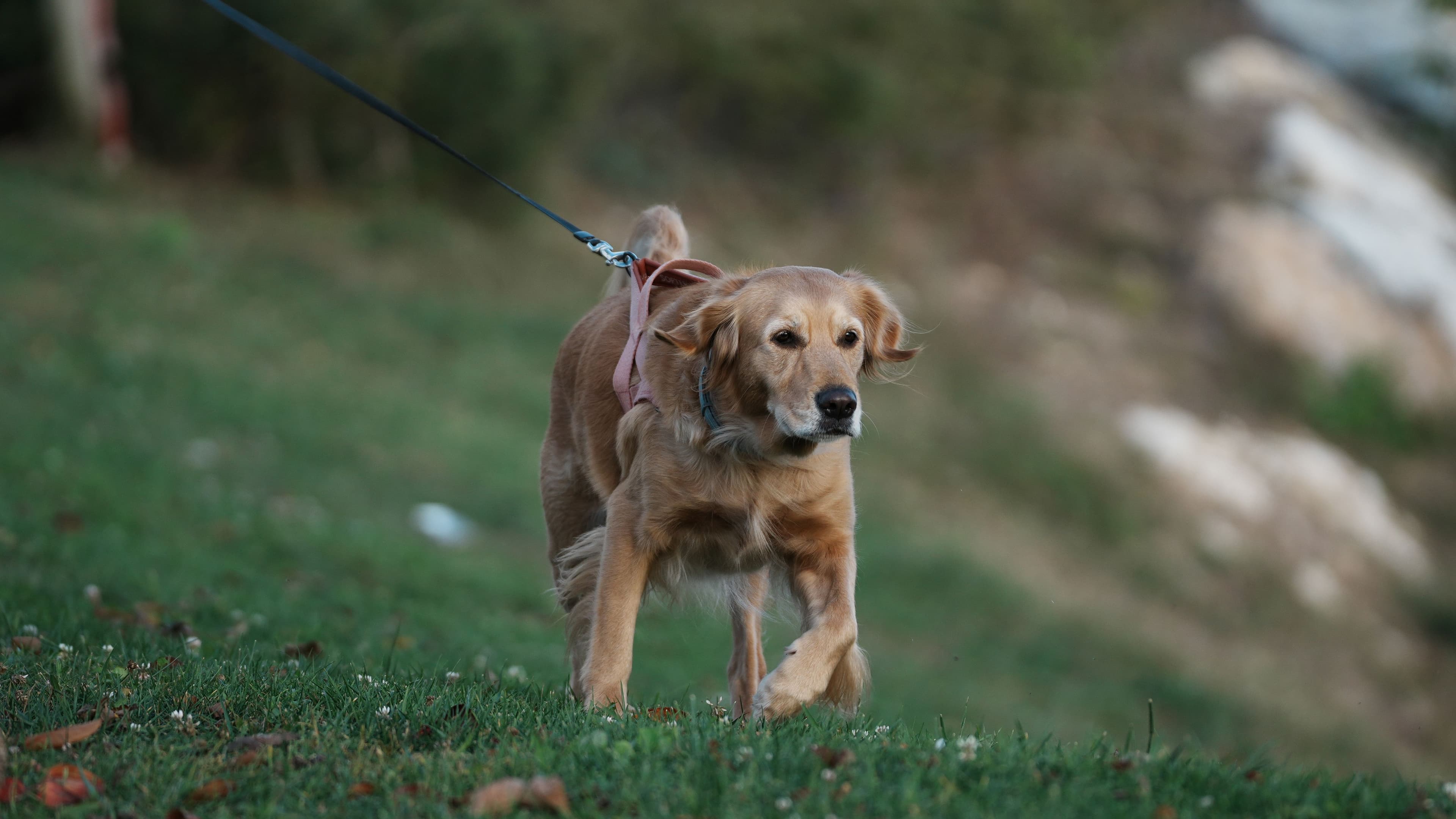
A dog who pulls is not trying to win a contest. The outside world is full of scent, movement, anticipation, and sometimes worry. The leash simply reveals the difference between the dog’s pace and the person’s pace.
What pulling can mean
The same visible behavior can have different causes. One dog may be rushing toward a familiar park, another may be trying to create distance from traffic, and another may never have learned that a loose leash is rewarding.
- Excitement and anticipation
- A natural walking pace faster than ours
- Access to smells or social contact
- Frustration created by restraint
- Fear and an attempt to move away
- A long history of pulling successfully
Start with the environment
Learning becomes harder when arousal is already high. Begin in a quiet location, use equipment that allows comfortable movement, and make the first few minutes of the walk predictable. Distance from triggers is not failure; it is part of creating a situation in which learning is possible.
Teach the skill you want
Reward moments when the leash is loose, before tension appears. Change direction gently, invite the dog to follow, and reinforce check-ins. Short repetitions are more useful than waiting for a dog to fail during an entire walk.
- Choose five quiet minutes for practice
- Mark and reward voluntary attention
- Let sniffing function as a real-life reward
- Pause or change direction before the leash becomes fully tight
- Gradually add difficulty instead of testing the dog
When pulling is an emotional problem
If pulling appears with freezing, lunging, barking, frantic scanning, or attempts to escape, address the emotional response rather than concentrating only on leash position. Sudden changes also deserve a veterinary check to rule out pain or illness.
Key takeawayLoose-leash walking is a learned coordination skill, not a test of respect.
Sources and further reading
This guide follows humane, reward-based principles and should not replace veterinary advice.